Is VoIP Blocked in the UAE? A Complete Guide
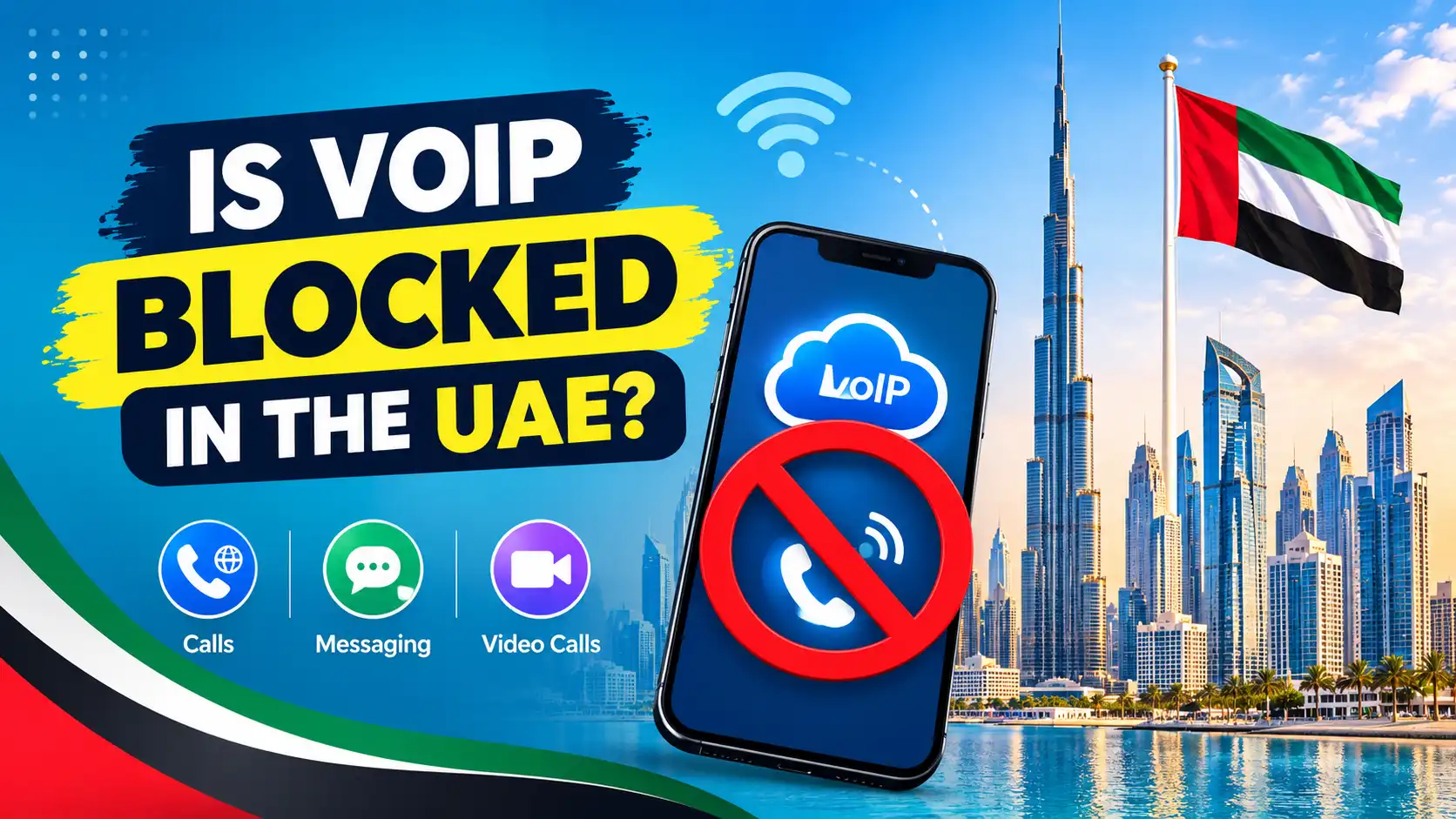
VoIP calling isn’t fully banned in the UAE. What’s blocked is unlicensed VoIP — the kind you get from apps like WhatsApp and FaceTime. Licensed VoIP, run through Etisalat or du, is legal and widely used by businesses.
The UAE’s telecom regulator, the Telecommunications and Digital Government Regulatory Authority (TDRA), controls who can offer voice and video calling over the internet. Only approved providers and apps can offer it. Everything else gets blocked.
This article breaks down why the block exists, what’s allowed, what isn’t, and what businesses can legally use instead.
Is VoIP Completely Banned in the UAE?
No. VoIP is legal in the UAE — but only through licensed channels.
What’s not allowed is unlicensed VoIP. This covers voice and video calling on apps that haven’t been approved by the TDRA. WhatsApp calls, FaceTime, and Skype-to-mobile calls fall into this category.
As of 2026, these calling features remain blocked, with no sign of the ban being lifted.
Why Is VoIP Blocked in the UAE?
The short answer is licensing. The UAE treats VoIP as a regulated telecom service, not a free-for-all internet feature. If a provider doesn’t have a license, its calling service gets blocked. Here is the reasons :
1. VoIP Services Are Subject to Licensing
Under UAE telecom law, offering VoIP without a license is a legal violation. Federal Law Number 3 of 2003, Article 72, sets a penalty of up to one year in prison and a fine between AED 50,000 and AED 1,000,000 for unauthorised VoIP use.
This rule has been in place for a long time. The TRA’s VoIP policy has stayed unchanged since December 30, 2009 — only the regulator’s name has changed since, from TRA to TDRA.
2. Regulation of Internet-Based Calling
The TDRA requires that all VoIP traffic — voice and video calls made over the internet — pass through a licensed carrier. This gives the regulator visibility and control over calling traffic in the country.
This is also why calling features get blocked even when the rest of an app works fine. WhatsApp messaging works normally in the UAE. It’s only the voice and video calling feature that gets blocked, because that’s the part that runs over unlicensed VoIP.
3. Licensed Telecom Operators
Only two companies are licensed to provide VoIP in the UAE: Etisalat (e&) and du. This has been the case since the TRA’s original 2009 policy, which stated that only these two licensees could offer VoIP service in the local market.
Any VoIP service that isn’t routed through one of these two operators is treated as unlicensed — regardless of how popular or widely used it is elsewhere in the world.
4. Consumer VoIP vs. Approved Business Services
There’s a difference between calling on a consumer app and running VoIP for a business.
For businesses, the legal path is a PABX or PBX phone system connected to a licensed SIP trunk from Etisalat or du. This lets staff make and receive calls over the internet while staying fully compliant, since the calls travel through the licensed carrier’s network just like a regular phone line.
Consumer apps work differently. Even the approved ones, like Botim, are built for personal or small-scale use rather than as a full business phone system. Companies that want call recording, multiple extensions, or a proper office number setup generally need a licensed PBX system rather than a consumer calling app.
Is Using a VPN for VoIP Illegal in the UAE?
Using a VPN in the UAE is not illegal by itself. The TRA confirmed back in 2016 that companies, institutions, and banks can use VPNs for internal purposes. Millions of people in the UAE use VPNs every day for work and privacy without any issue.
The law only becomes a problem when a VPN is used to commit or hide a crime. Under Federal Decree-Law No. 34 of 2021, anyone who uses a fake or masked IP address to commit a crime or avoid detection can face a fine between AED 500,000 and AED 2,000,000, and possibly imprisonment.
Using a VPN specifically to bypass the VoIP block — say, to make a WhatsApp call — sits in a grey area. It technically works around a TDRA restriction, which some legal commentators treat as falling within the scope of this law. That said, there are no public records of anyone being fined or arrested simply for using a VPN to make a personal WhatsApp call. Enforcement appears to be aimed at serious cybercrime, not casual personal calling.
So the practical risk for an individual making the occasional personal call is low, but it isn’t zero, and it isn’t officially sanctioned either.
Why Does WhatsApp Calling Not Work in the UAE?
WhatsApp’s voice and video calling feature is blocked because WhatsApp isn’t a licensed VoIP provider in the UAE. Its messaging, photos, and file sharing all work fine — it’s only the calling feature that gets stopped, since that’s the part classified as VoIP.
This isn’t a new or temporary issue. As of 2026, WhatsApp voice and video calling remains blocked under TDRA regulations, with no change reported.
There have been brief moments in the past where the block seemed to lift. In one case, users found they could suddenly make WhatsApp calls, only for the feature to stop working again within hours. The TRA responded at the time by confirming there was no change in the UAE’s policy on VoIP services, and that any calling app must operate within the country’s regulatory framework.
So any time WhatsApp calling appears to work briefly in the UAE, it’s most likely a temporary glitch rather than a policy change.
Which VoIP Apps Are Allowed in the UAE?
A number of apps are approved by the TDRA and work for voice and video calling in the UAE. These include:
- Botim — one of the most widely used approved apps, available on both iOS and Android
- C’Me — offered by du as part of its approved calling services
- GoChat Messenger — launched by Etisalat in 2022, offering voice and video calling, text, and group chat
- Voico — supports chat, voice, and video calls, available on Apple, Android, and Windows
- Comera — supports one-to-one chats, voice calls, and video calls
- Microsoft Teams — approved for voice, video, and messaging, mainly used by businesses
- ToTok — a UAE-based messaging and calling app
- Zoom — approved for voice and video calls, including Zoom Phone
- Cisco Webex — an enterprise-grade approved platform
FAQs On VoIP in UAE
Q1. Is VoIP available in the UAE?
Yes, but only through licensed channels. Businesses can use VoIP legally through Etisalat or du.
Q2. Why are calls blocked in the UAE?
Calls made through unlicensed VoIP apps are blocked because the UAE requires all VoIP traffic to run through a licensed carrier — Etisalat or du. This gives the TDRA control and visibility over calling traffic in the country.
Q3. Which VoIP apps are allowed in the UAE?
Approved apps include Botim, C’Me, GoChat Messenger, Voico, Comera, Microsoft Teams, ToTok, Zoom, and Cisco Webex.
Q4. Which VoIP app works in Dubai?
Botim is the most widely used approved calling app in Dubai and across the UAE.
Q5. Will the UAE ever lift the VoIP ban?
There have been past discussions about easing restrictions, including requests from the Federal National Council and testing periods with WhatsApp. As of 2026, no change has been made, and voice and video calling on unlicensed apps remains blocked.
Final Remarks
VoIP isn’t banned in the UAE — it’s controlled. Licensed VoIP is legal and works well for businesses. Unlicensed VoIP, the kind built into apps like WhatsApp and FaceTime, is blocked because it falls outside the country’s licensing rules.
For individuals, this means sticking to TDRA-approved apps for calling. For businesses, it means the safest long-term option is a proper PBX system connected to a licensed SIP trunk, rather than relying on a consumer app that could lose its approval or stop working without warning.
Read More : How to Find the Owner of a VoIP Number? 9 Safe Lookup Methods (2026)